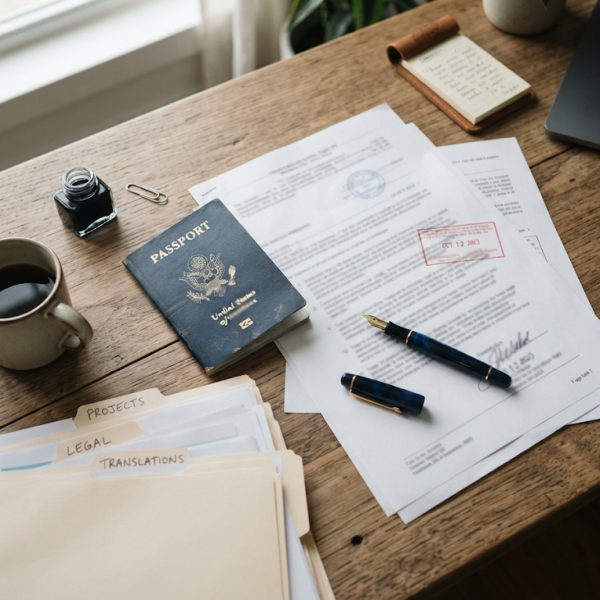

Accurate translation can make or break how your message is perceived in another language. When words cross borders, they carry cultural nuances, legal implications, and brand reputation with them. Yet even professionals sometimes fall into common traps that distort the meaning of the original text. For businesses, this can result in confused customers, damaged trust, and even costly compliance issues.
Common Translation Pitfalls That Distort Your Message
Whether you are localizing your website, creating multilingual contracts, or sending cross-border invoices, avoiding translation errors is critical. Inconsistent wording, cultural missteps, and technical inaccuracies can all alter what you actually intend to say. Below are some of the most frequent mistakes and how to avoid them, especially when dealing with important business documents like invoices and financial statements. When you combine precise language with a reliable tool such as a invoice pdf generator, you reduce the risk of misunderstandings in every market you serve.
1. Translating Word-for-Word Instead of by Meaning
One of the most pervasive errors is literal, word-for-word translation. Languages rarely map perfectly onto each other. Expressions, sentence structure, and even basic grammar can differ so much that a literal rendering sounds awkward, confusing, or completely wrong.
For example, idioms like “break even,” “on the same page,” or “in the red” translate poorly if you swap words one by one. This is especially dangerous in contracts and financial communications, where misinterpreting a phrase can change obligations or expectations. Translators should focus on conveying the underlying message, not mechanically mirroring the original syntax.
2. Ignoring Cultural Context and Local Norms
Culture shapes how language is used and understood. A phrase that is neutral or positive in one language may be rude, sarcastic, or too informal in another. Ignoring these subtleties can alienate the very audience you are trying to reach.
Examples include:
- Using overly casual language in cultures that expect formality in business communication.
- Misusing honorifics or titles in regions where hierarchy and respect are critical.
- Including humor or wordplay that does not translate and may seem confusing or offensive.
A culturally aware translation adapts tone, references, and formality so that the message feels native to your target market rather than imported and out of place.
3. Misinterpreting Technical and Legal Terms
Specialized terminology in areas such as law, medicine, finance, and engineering cannot be guessed or approximated. Misusing one technical term can affect compliance, cause financial errors, or lead to contractual disputes.
Common issues include:
- Confusing similar terms that have strict legal differences.
- Using generic words where a specific regulatory term is required.
- Translating product specifications incorrectly, leading to mismatched expectations.
Translators should rely on glossaries, industry standards, and subject-matter experts to ensure accuracy. This is particularly important in invoices, tax-related documents, and international agreements, where a single mistranslated term can be expensive to fix.
4. Overlooking Numbers, Dates, and Formatting Conventions
Translation is not only about words. Numerical formats and conventions change from country to country and can cause serious confusion if left unadapted.
Examples of risky inconsistencies:
- Date formats: 03/04/2025 may mean March 4 in one country and April 3 in another.
- Decimal and thousands separators: 1,500 vs 1.500 vs 1 500 can indicate very different amounts depending on the locale.
- Currency symbols and codes: Using “$” alone can be ambiguous without specifying USD, CAD, AUD, etc.
Ignoring these formats can distort figures, especially in financial reports and invoices. Localizing such details is just as important as translating the surrounding sentences.
5. Inconsistent Terminology Across Documents
When the same concept is translated differently in various places, readers may think you are referring to separate ideas. In business, this can affect brand identity and legal clarity.
Typical inconsistency problems include:
- Using multiple translations for product names or feature labels.
- Changing the translation of legal clauses between versions of a contract.
- Varying terms within a single document, such as alternating between “client,” “customer,” and “buyer” where a single defined term is needed.
Translation memories, style guides, and term bases help maintain consistent wording, ensuring that key concepts remain stable across languages and documents.
6. Neglecting Tone, Brand Voice, and Level of Formality
Even when the facts are correct, a mismatch in tone can alter how your message is perceived. A brand that is friendly and conversational in one language may sound cold or overly stiff if the translation defaults to formal structures.
Common tone mistakes:
- Turning a persuasive marketing message into a plain, literal description.
- Using formal pronouns in a culture where brands commonly address users informally, or vice versa.
- Flattening emotional impact by removing emphasis, rhetorical questions, or calls to action.
Translators should be briefed on brand personality and audience expectations so they can recreate the intended effect, not just the dictionary meaning of each sentence.
7. Skipping Professional Review and Quality Assurance
Relying solely on automatic translation tools or unreviewed drafts is another frequent mistake that leads to altered meaning. While technology can speed up the process, human oversight is essential for nuance, accuracy, and style.
A robust review workflow typically includes:
- Editing by a second linguist to refine clarity and coherence.
- Proofreading to catch typos, formatting issues, and inconsistencies.
- Final checks by subject-matter experts for technical and legal correctness.
Skipping these steps increases the risk of mistranslations that slip into final versions of contracts, invoices, manuals, or marketing materials and then spread across markets.
8. Forgetting About Layout and Design in the Target Language
Translated text can expand or contract compared to the source language, which may break your design. Overlapping text, truncated labels, or misaligned headings can make content look unprofessional or even unreadable.
Examples of layout issues include:
- Buttons that cannot fit longer translated text.
- Tables and forms that do not adjust to right-to-left languages.
- Line breaks that split words incorrectly, making them hard to read.
Effective localization accounts for both language and layout. Designs should be flexible enough to accommodate different text lengths and directions, especially in structured documents like invoices, certificates, and reports.
Conclusion: Protecting Your Message Across Languages
When content moves from one language to another, the risk of changing its meaning is high. Literal translations, cultural missteps, technical inaccuracies, and poor formatting all contribute to messages that no longer match the original intent. By recognizing these common mistakes and building translation workflows that prioritize clarity, consistency, and quality assurance, you safeguard your brand, your legal standing, and your customer relationships.
Investing in professional translation, well-defined style guides, and the right digital tools is not just a linguistic decision; it is a strategic business move. Each accurately translated page, contract, and invoice strengthens your presence in international markets and ensures that what you say is exactly what your audience understands.